Steam
Store data
- UK price
- £4.59
- US price
- Awaiting regional check
- Positive reviews
- —
- Total reviews
- 0
- Release date
- 27 October 2026
SteamWatch’s first observed day and week; tracking can begin after release. Top Sellers is Steam’s revenue ranking, not a sales estimate.
1 player-data day recorded in this window.
2 player-data days recorded in this window.
24-hour and 7-day views use hourly peaks from ten-minute samples. Longer views use retained daily peaks. Up to 24 recent event markers are shown per layer.
| Month | Peak | Gain | % gain | Average | Avg % gain |
|---|---|---|---|---|---|
| Last 30 days | 1 | — | — | 0 | — |
| October 2026 | 1 | — | — | 0 | — |
| Region | Currency | Regular | Current | Discount | Historical low | Last change |
|---|---|---|---|---|---|---|
| United KingdomGBP · GB | — | — | Unavailable | — | — | No change recorded |
| United StatesUSD · US | — | — | Unavailable | — | — | No change recorded |
| Euro areaEUR · DE | — | — | Unavailable | — | — | No change recorded |
| United Arab EmiratesAED · AE | — | — | Unavailable | — | — | No change recorded |
| AustraliaAUD · AU | — | — | Unavailable | — | — | No change recorded |
| BrazilBRL · BR | — | — | Unavailable | — | — | No change recorded |
| CanadaCAD · CA | — | — | Unavailable | — | — | No change recorded |
| SwitzerlandCHF · CH | — | — | Unavailable | — | — | No change recorded |
| ChileCLP · CL | — | — | Unavailable | — | — | No change recorded |
| ChinaCNY · CN | — | — | Unavailable | — | — | No change recorded |
| ColombiaCOP · CO | — | — | Unavailable | — | — | No change recorded |
| Costa RicaCRC · CR | — | — | Unavailable | — | — | No change recorded |
| Hong KongHKD · HK | — | — | Unavailable | — | — | No change recorded |
| IndonesiaIDR · ID | — | — | Unavailable | — | — | No change recorded |
| IsraelILS · IL | — | — | Unavailable | — | — | No change recorded |
| IndiaINR · IN | — | — | Unavailable | — | — | No change recorded |
| JapanJPY · JP | — | — | Unavailable | — | — | No change recorded |
| South KoreaKRW · KR | — | — | Unavailable | — | — | No change recorded |
| KuwaitKWD · KW | — | — | Unavailable | — | — | No change recorded |
| KazakhstanKZT · KZ | — | — | Unavailable | — | — | No change recorded |
| MexicoMXN · MX | — | — | Unavailable | — | — | No change recorded |
| MalaysiaMYR · MY | — | — | Unavailable | — | — | No change recorded |
| NorwayNOK · NO | — | — | Unavailable | — | — | No change recorded |
| New ZealandNZD · NZ | — | — | Unavailable | — | — | No change recorded |
| PeruPEN · PE | — | — | Unavailable | — | — | No change recorded |
| PhilippinesPHP · PH | — | — | Unavailable | — | — | No change recorded |
| PolandPLN · PL | — | — | Unavailable | — | — | No change recorded |
| QatarQAR · QA | — | — | Unavailable | — | — | No change recorded |
| RussiaRUB · RU | — | — | Unavailable | — | — | No change recorded |
| Saudi ArabiaSAR · SA | — | — | Unavailable | — | — | No change recorded |
| SingaporeSGD · SG | — | — | Unavailable | — | — | No change recorded |
| ThailandTHB · TH | — | — | Unavailable | — | — | No change recorded |
| TaiwanTWD · TW | — | — | Unavailable | — | — | No change recorded |
| UkraineUAH · UA | — | — | Unavailable | — | — | No change recorded |
| UruguayUYU · UY | — | — | Unavailable | — | — | No change recorded |
| VietnamVND · VN | — | — | Unavailable | — | — | No change recorded |
| South AfricaZAR · ZA | — | — | Unavailable | — | — | No change recorded |
| CIS (regional USD)USD_CIS · AM | — | — | Unavailable | — | — | No change recorded |
| Latin America (regional USD)USD_LATAM · AR | — | — | Unavailable | — | — | No change recorded |
| Middle East & North Africa (regional USD)USD_MENA · EG | — | — | Unavailable | — | — | No change recorded |
| South Asia (regional USD)USD_SASIA · PK | — | — | Unavailable | — | — | No change recorded |
Recent views use Steam's daily review activity. Longer views use weekly totals, retained by SteamWatch.
Four keys. Twelve tones. Eighty pieces of original music — forty songs and four ten-act suites — and nothing anywhere that can throw you out.
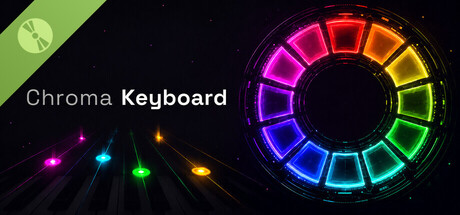
CHROMA Keyboard is a falling-note rhythm game built on one idea: the twelve notes of the chromatic scale, folded onto four keys, each note keeping its own colour. You read the colour before you read anything else.
No health bar. No failure gauge. No run that ends early.
Miss a note and the game says so — and then the song keeps playing, to the last bar, every time. The timing windows are wide, and the game shows you exactly how wide: ±80 ms for a Perfect, ±160 ms for a Good, printed on screen while you play. They are there to reward precision, not to punish its absence. The tutorial holds its first four notes on the judgment line and waits for you.
Chase a rainbow star. Chase a full combo. Or put a track on and play it badly for an hour. The game does not mind.
The library is arranged as a map rather than a genre list — East Asia · South & Southeast Asia · the Middle East · Africa · Celtic · Slavic · Latin America , and then Classical · Jazz · Dance · Pop · Electronic .
Forty original tracks live on it: a Javanese gamelan under the moon, twenty-one strings of a West African kora, a Korean sanjo in the pine wind, an Arabic longa running downwind on the Nile, a Bulgarian horo on the threshing floor, an Andean huayno after the rain, a milonga on the docks, a slip jig, a fugue, a waltz, a bebop head, a techno sequencer at midnight, a city-pop night drive.
Every one is written for this game — composed bar by bar against the chart it becomes, then performed by a synthesizer built for that piece alone. No loops, no sample packs, no licensed catalogue. Each tradition brings its own instruments, its own drum patterns, and its own colour scheme for the entire screen.
Every track sits at one of three difficulties — sixteen Hard, twelve Normal, twelve Easy — and every region of the map has both a gentle one and a demanding one. There is also a listening mode, if you would rather just hear them.
The Epics are the long form, and they are the reason this game exists.
Each one is a suite of ten acts of ninety seconds — fifteen unbroken minutes of continuous music, played through in a single sitting. The acts do not stop between them and there is no retry inside a run; what gets judged at the end is the whole fifteen minutes.
Gilgamesh — the king of Uruk, the cedar forest, the death of Enkidu, the waters of death, and the walls he comes home to.
The Iliad — wrath, a thousand ships, the duel and the funeral fires, and a body given back.
The Odyssey — the sea, the cave, the sirens, the blind singer's harp, and a bow drawn in a hall.
The Bhagavad Gita — two armies, a chariot stopped between them, and a conversation that fills the pause.
Three of the four are scored for orchestra — oboe and flute carrying the line, harp and pizzicato strings answering, trumpet and horn for the weight, timpani underneath. The Bhagavad Gita leaves that palette entirely: a tanpura drone that holds the stopped time, tabla playing theka, bansuri and shehnai in question and answer, conch shells at both ends.
Motifs run the length of each suite. In the Gita, one voice asks a question that refuses to land on the tonic for nine acts; in the tenth it finally lands, the conches sound again, and the drone stops.
Four keys, twelve notes — so every key carries three of them, and the colour tells you which. The mapping is fixed and printed under the keys, the same on every track, so it becomes reading rather than memorising.
The consequence is that a scale is not a straight line across the board. Stepwise motion crosses lanes; the interval you hear has a shape under your fingers. Every piece here was written knowing that.
Rebindable keys, an audio-offset calibration, windowed or fullscreen.
Thirty-one languages — English, 简体中文, 繁體中文, 日本語, 한국어, Bahasa Indonesia, Bahasa Melayu, Български, Čeština, Dansk, Deutsch, Español, Español (Latinoamérica), Français, Italiano, Magyar, Nederlands, Norsk, Polski, Português, Português (Brasil), Română, Русский, Suomi, Svenska, Tiếng Việt, Türkçe, Українська, Ελληνικά, العربية, ไทย.
Thirty achievements — from the first lesson to every star on every act.
Stars, rainbows and full combos on every chart, and a Flawless Run to be had on each Epic.
A listening mode with favourites, for the tracks and for all forty acts.
Eighty pieces of music, and nothing anywhere that can throw you out. Take as long as you like.
| # | ||
|---|---|---|
| 01 | Tutorial | 75.0% |
| 02 | Fc 1 | 50.0% |
| 03 | Genre 6 | 50.0% |
| 04 | Hard 1 | 50.0% |
| 05 | Score 500k | 50.0% |
| 06 | Songs 1 | 50.0% |
| 07 | Songs 10 | 50.0% |
| 08 | Stars 30 | 50.0% |
| 09 | Genre All | 25.0% |
| 10 | Rainbow 1 | 25.0% |
| 11 | Score 2m | 25.0% |
| 12 | Songs 25 | 25.0% |
| 13 | Stars 75 | 25.0% |
| 14 | Epic 1 | 0.0% |
| 15 | Epic 2 | 0.0% |
| 16 | Epic Act Rb 1 | 0.0% |
| 17 | Epic Act Rb 10 | 0.0% |
| 18 | Epic Act Rb All | 0.0% |
| 19 | Epic All | 0.0% |
| 20 | Epic Fc 1 | 0.0% |
| 21 | Epic Fc All | 0.0% |
| 22 | Fc 12 | 0.0% |
| 23 | Fc All | 0.0% |
| 24 | Hard All | 0.0% |
| 25 | Perfection | 0.0% |
| 26 | Rainbow 12 | 0.0% |
| 27 | Rainbow All | 0.0% |
| 28 | Score 5m | 0.0% |
| 29 | Songs All | 0.0% |
| 30 | Stars All | 0.0% |
1 concurrent players — the highest daily peak recorded at that point.
Release date supplied by the Steam store.